

Questions about artificial intelligence, and what to ask an AI
- What is it?
- What are its advantages?
- What is its future?

This page answers nine questions about artificial intelligence: its limits, its risks, its effect on employment and your personal data.
It does not let you ask your own question to an AI. To find out what to ask an assistant, including about your meetings, read the section "What questions should you ask an AI?".
Artificial intelligence has invaded our lives at a lightning pace in recent years. From voice assistants in our smartphones to autonomous cars, AI plays a growing role in our daily lives. However, with this rise in power, many questions also arise. In this article, we will explore nine questions about artificial intelligence.
What is artificial intelligence?
Artificial intelligence is a technology that allows computers to do intelligent things, such as understanding human language, recognizing objects in images, or making decisions based on information. There are several types of AI, including:
- Weak (or narrow) AI: This is the type of AI currently found. It is very specialized and can perform specific tasks, such as machine translation or speech recognition. It cannot do things outside of its area of expertise.
- Strong (or general) AI: It is AI that would be as intelligent as the human being, able to understand any intellectual task that the human can accomplish. We are not there yet, but researchers are working to develop this form of AI.
- Superintelligent AI: This is a hypothetical form of AI that would be even smarter than humans and could even improve itself. This is a topic of debate and reflection among AI researchers.
How does AI work?
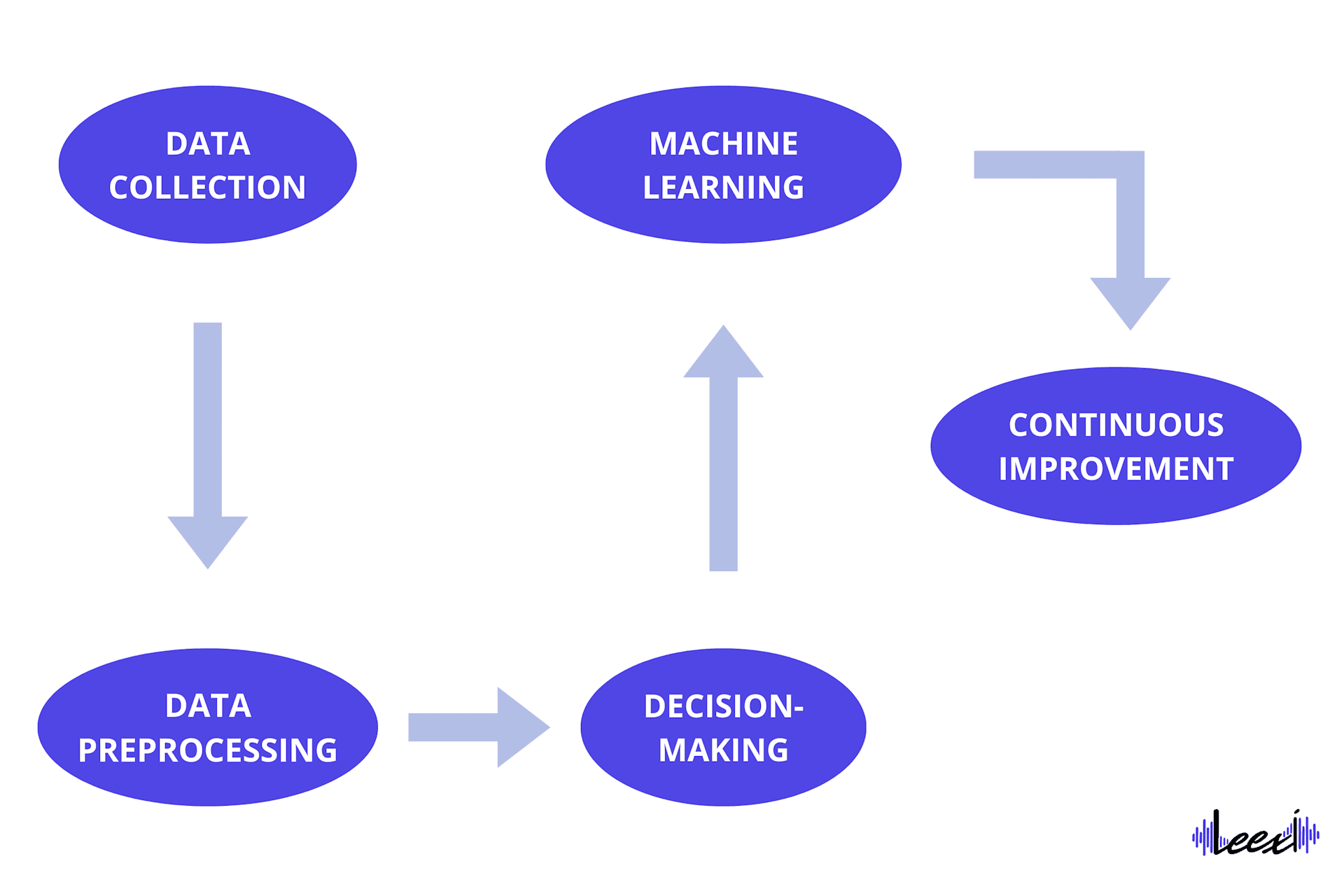
AI works by using computer algorithms to process data and perform specific tasks in an intelligent way, similar to how the human brain works. Here’s how it works in a simplified way:
- Data collection: AI begins by collecting data from various sources, such as images, texts, videos, or other types of information. The more data, the better, because it allows AI to learn from a vast set of information.
- Data preprocessing: Before being used, the data is cleaned and preprocessed to eliminate potential errors. This ensures that the data is of high quality and suitable for analysis.
- Machine learning: One of the key techniques of AI is machine learning. AI uses machine learning algorithms to analyze data and identify patterns. In the field of AI, two important approaches are deep learning and machine learning. Machine learning allows AI to learn from data without being explicitly programmed, while deep learning uses deep artificial neural networks to perform complex tasks such as image recognition and natural language understanding.
- Decision making: Once it has learned from the data, the AI can make decisions or perform actions based on the information it has acquired. For example, a chatbot AI can answer questions using the knowledge it has learned.
- Continuous improvement: AI can improve over time through an iterative process. The more data and information it receives, the more accurate and efficient it becomes in its tasks.
There are different types of AI, including:
- supervised AI: it learns from data labeled by humans
- unsupervised AI: looking for patterns without labeled data
- reinforcement learning: it learns by trial and error by interacting with its environment.
What is the world’s largest artificial intelligence?
There is not really a single "largest" artificial intelligence in the world, because artificial intelligence comes in many forms and sizes, each specialized in specific tasks. Some of the most advanced artificial intelligences are developed by leading technology companies such as Google, Amazon, Microsoft, IBM and others.
For example, OpenAI has developed advanced artificial intelligence such as the GPT-6 models (as of November 13, 2026), which are able to generate text in a very realistic way and answer a variety of questions. Amazon has developed Alexa, an artificial intelligence that powers its smart home devices and can respond to a range of voice commands.
However, it is important to note that these artificial intelligences are specialized in their respective fields and cannot be directly compared to each other as one would with human beings. Artificial intelligence is a constantly evolving field, with many advances to come.
For a comparison of language models, see The 5 best language models and their uses.

What are the limits of AI?
AI is a fascinating technology that can accomplish incredible tasks, but it also has its limits. Understanding these limitations is essential to having realistic expectations of what AI can accomplish.
First, AI relies heavily on data. It needs large amounts of data to learn and make decisions, which can be a challenge for companies that do not have access to large data sets. Another limitation is the lack of contextual understanding. If an AI is trained to perform a specific task, it can do so with great precision, but it can be lost in new or unpredictable situations. Moreover, AI is not creative and has no consciousness. It follows instructions and performs tasks based on these instructions, but it cannot think autonomously or feel emotions. Complex tasks that require deep understanding, such as solving complex problems or making ethical decisions, remain a challenge for AI. It has difficulty dealing with these issues satisfactorily. With respect to security and privacy, the use of AI in sensitive areas, such as medicine, raises data security and privacy concerns. Finally, AI is evolving rapidly, which means that AI professionals must constantly stay up to date to stay competent.
Understanding these limitations while exploring the possibilities of AI is essential to use this technology effectively and ethically.
Model errors, and why you should review what they produce
OpenAI calls a hallucination a plausible but false statement generated by a language model.
In a post dated September 5, 2025, the company writes that hallucinations remain a fundamental challenge for all large language models. Standard training and evaluation reward guessing more than admitting uncertainty.
According to this post, GPT-5 hallucinates significantly less, especially when it reasons, but hallucinations persist. The OpenAI pages consulted give no numerical error rate for a current model.
The ChatGPT help center cites incorrect definitions or dates, references that do not exist and overconfident answers to an ambiguous question. Its advice: use the answer as a first draft and verify important information.
Microsoft recommends regularly reviewing and validating Copilot's answers.
Two prospects mentioned hallucinations in demos. In January 2026, one of them was talking about associating calls with CRM objects: "there are often hallucinations on that part" (translated from French). In June 2026, the other said: "The problem which we might have all or experienced all is the hallucination".
To review meeting minutes produced by an AI, see AI meeting minutes: generate them, review them, share them. To review a text produced by ChatGPT, see 9 ChatGPT prompts to copy for your meeting minutes.
What is the future of AI?
The future of AI is both promising and worrying. On the one hand, it has the potential to transform many aspects of our lives in a positive way, improving our health, education, work and environment. On the other hand, it also raises ethical and moral concerns, including the risk of discrimination, job loss and the creation of autonomous weapons.
For AI to be a positive force in the world, it is important to develop and use it responsibly. This includes ensuring that it is designed and used in an ethical and inclusive manner, and taking steps to mitigate any negative impacts it may have on society.
Here are some concrete examples of how AI can be used positively:
- In medicine, AI can be used to develop new treatments and diagnostics, and to provide more personalized healthcare
- In education, AI can be used to tailor learning to the needs of each student, and to provide more accessible and better quality educational resources.
- In the world of work, AI can be used to automate repetitive and dangerous tasks, and to create new jobs in areas such as the development and use of AI itself.
- In environmental protection, AI can be used to monitor ecosystems, develop renewable energy and fight climate change.
However, it is important not to ignore the ethical and moral challenges that AI raises. For example, it is important to ensure that AI systems are not used to discriminate against certain groups of people. It is also important to take steps to prevent AI from leading to massive job losses, and to ensure that autonomous weapons are not developed and used.
This question has its own page: Artificial intelligence, where are we going?.
What are the benefits of using AI in business?
AI offers a wide range of benefits to businesses, including improved efficiency, decision-making, customer experience, and the development of new products and services.
AI can be used to automate repetitive and time-consuming tasks, freeing up time for employees to focus on more complex and strategic tasks. For example, AI-powered chatbots can be used to answer customer questions 24/7, allowing human agents to focus on more complex issues. AI can also be used to analyze large amounts of data and identify trends and patterns that may not be immediately apparent to humans. This can help companies make more informed decisions, such as optimizing supply chains or developing new products. Finally, AI can be used to personalize the customer experience, which can lead to increased customer satisfaction and loyalty. For example, AI-powered recommendation systems can be used to suggest products or services to customers based on their needs and interests.
AI is a promising technology that has the potential to transform many aspects of business. However, AI also raises potential challenges, such as cost, complexity and bias. It is important to be aware of these potential challenges and put measures in place to mitigate them.
Is AI dangerous?
AI is a powerful technology that can be used for good or evil. It is still developing, but it already has the potential to transform many aspects of our lives.
AI can be used to automate tasks, make decisions and solve problems more efficiently than humans. It can also be used to create new technologies and products.
However, AI also raises concerns about its dangerousness. It could be used for malicious purposes, such as developing autonomous weapons, spreading misinformation or stealing data. It could also lead to job loss and social inequality.
The dangerousness of AI depends first and foremost on its use. It can be compared to fire, which can be used to improve our daily lives, for example to cook food or warm us up in winter, but which can also be used maliciously to cause destructive and deadly fires. Everything will depend on its use.

What the European regulation classifies by risk level
Regulation (EU) 2024/1689 sets its rules according to how AI is used. According to the "AI Act" page of the European Commission, updated on October 19, 2026, it distinguishes four levels of risk.
| Level | Examples | Rule |
|---|---|---|
| Unacceptable risk | Social scoring, emotion recognition at work and in education | Prohibited since February 2, 2025 (Article 5) |
| High risk | Systems used for employment and workers' management, education, the administration of justice (Annex III) | Strict obligations before being placed on the market (Article 6) |
| Transparency risk | A system that interacts with a person | The person must be informed that they are interacting with an AI, unless this is obvious (Article 50) |
| Minimal risk | Video games, spam filters | No specific rule |
Separately, the regulation classifies certain general-purpose AI models according to their capabilities: those that present a "systemic risk" (Article 51).
The application dates changed in 2026. Regulation (EU) 2026/1744 was published in the Official Journal on July 24, 2026. It postpones the rules on the high-risk systems of Annex III to December 2, 2027. For those of Annex I, the date moves to August 2, 2028.
Since August 2, 2026, the regulation has applied generally, Article 50 included. These are the dates in force as of November 13, 2026.
Leexi says it aligns with this regulation, notably on transparency: an assistant visible in the meeting and information given to participants. The Compliance and Sovereignty FAQ details this point.
How can we be sure that artificial intelligence is used ethically while protecting our personal data?
The issue of ethics in the use of AI is crucial. To ensure that AI is used ethically while protecting our personal data, several steps must be taken.
First, AI designers must ensure that their algorithms meet strict ethical standards. This means that they must avoid discrimination, bias and violation of privacy. Supervisory authorities already exist: the GDPR and the European AI regulation provide for them in each Member State. When it comes to personal data protection, it is crucial to have laws and regulations in place to ensure that users' information is properly managed.
In summary, the key is to combine an ethical design of AI with appropriate regulation to protect user privacy. This will allow you to reap the benefits of AI while minimizing potential risks.
What the GDPR requires
The GDPR protects personal data: "any information relating to an identified or identifiable natural person" (Article 4, point 1).
Its Article 5 sets out six principles: lawfulness, fairness and transparency; purpose limitation; data minimisation; accuracy; storage limitation; integrity and confidentiality. The controller must be able to demonstrate that it complies with them.
Article 22 gives the right not to be subject to a decision based solely on automated processing. It applies when the decision produces legal effects or significantly affects you.
Three exceptions exist: the contract, a legal authorization with safeguards, and explicit consent. For the contract and consent, you can obtain human intervention, express your point of view and contest the decision.
The CNIL published its recommendations on the development of AI systems on July 22, 2025. It writes there that "the GDPR and the AI Act both apply" when personal data is used to develop an AI system (translated from French).
It points out that the GDPR lists six legal bases, to be set in advance. Web scraping of data "is not, in itself, prohibited by the GDPR". The CNIL recommends using "as little personal data as possible" (both quotes translated from French).
It also says that models trained on personal data may be subject to the GDPR. It cites the opinion of the European Data Protection Board of December 2024.
Training and hosting: what Leexi says about your meetings
Leexi says that your conversations are not used to train the models, for all accounts, by default. The language model is provided by OpenAI and run via Azure France, in a closed circuit. Data is hosted on AWS, Paris region.
The details and the documents to send to a DPO are in AI Non-Training: Legal Requirements and What Leexi Provides. See also the Compliance and Sovereignty FAQ and the security section.
What buyers check, and where they disagree
In May 2026, a prospect said they had noted at Leexi: "guaranteed non-use, non-use of the data for training, there was ISO 27001, GDPR" (translated from French).
The disagreement concerns hosting in Europe. In May 2026 as well, another prospect: "I'm very wary of Microsoft Azure, AWS, etc. because the fact that they are based in Europe is, to me, a false sense of security" (translated from French).
In April 2026, a prospect cited the Cloud Act and the Patriot Act, "even though it's stored in Europe".
Leexi's FAQ acknowledges this limit: AWS is a company under US law. Leexi offers the Scaleway option for a strict sovereignty requirement.
These quotes come from three demos, not from a survey of buyers.
Will AI replace humans?
The idea that AI can completely replace man is a subject of debate among experts. Many applications of AI aim to complement human work rather than replace it. For example, chatbots and virtual assistants can automate repetitive tasks to allow humans to focus on more complex and creative tasks.
AI excels in specific areas and well-defined tasks, but it often lacks versatility and contextual understanding of human beings. Humans are able to adapt to a wide variety of situations and quickly learn new skills, making them irreplaceable in many areas.
While some tasks can be automated, the rise of AI also creates new jobs in the development, management and regulation of these technologies. In addition, AI decisions are based on algorithms and data, while humans consider ethical, moral and social considerations in their actions. AI can lack moral judgment and empathy.
Ultimately, rather than replacing humans, AI is more likely to collaborate with them. It frees up time by automating routine tasks, allowing humans to focus on higher value-added activities. The future of AI will depend on how it is used and integrated into society.
In summary
Artificial intelligence is a very interesting technology that can do a lot of amazing things, like understanding our voice and helping us in our tasks. However, it is normal to ask questions about its functioning and evolution. It’s important to continue to explore and learn about AI, as it will help us use it intelligently and build a better future with this exciting technology. So, let’s stay curious and ask more questions.
What questions should you ask an AI?
Questions to ask any assistant
OpenAI says that models give their best results with a clear and precise request. The company recommends phrasing it as you would address a person: identify the task, provide the context, specify the tone and style.
For a complex task, OpenAI advises breaking it down into smaller requests, asking for several options and refining the answer through successive exchanges.
Microsoft describes a request to Copilot in four parts: the goal, the context, the source and what you expect from the response. The source refers to the information or examples to use. The goal is enough to start, and an exchange over several turns is expected.
Microsoft also advises saying what to do rather than what not to do. Files or sources go last, and the response should be verified.
The rules of a prompt are detailed in Master the art of generating prompts with ChatGPT. The prompts for meeting minutes are in 9 ChatGPT prompts to copy for your meeting minutes.
Ask your meetings questions with Ask Leexi
Ask Leexi answers your questions about one meeting or several. Leexi gives as examples: "What budget did we approve?", "What blockers were mentioned?" and "What decisions were made at the last product meeting?".
On several calls, it finds, according to Leexi, "a delivery date mentioned across 4 different calls".
In a demo, a prospect said in January 2026: "I hadn't seen this Ask Leexi item. I thought you could only prompt on the meeting minutes." Another asked in March 2026: "which engine is Ask Leexi based on?" (both quotes translated from French).
The steps for access and use are detailed in How to use Ask Leexi, your AI assistant. The feature is presented in What is Ask Leexi, the AI assistant?.
Questions about Ask Leexi and your meeting data
Does Ask Leexi only answer about my meetings?
Ask Leexi answers about one call or several calls linked to the same project or the same client, based on your transcriptions, automatic notes, summaries and shared documents. It also answers questions unrelated to your meetings, such as writing a generic email or asking for a definition. You open it with the Ask Leexi button in the menu or the floating widget at the bottom right of your screen.
What model does Ask Leexi run on, and where is your data processed?
According to Leexi's compliance FAQ, the language model used is provided by OpenAI and run via Azure France, in a closed circuit. Data is hosted in France, on AWS (Paris region), with a Scaleway option. Leexi's DPA names ten subcontractors in Article 6.1.
Are my meetings used to train the AI?
Leexi says that your conversations are not used to train the models, and that this rule applies to all accounts, by default. Ask Leexi reads your meetings at the time of the question, in your account; the model is not modified by them. One limit to know about: DPA version 2.0 contains no dedicated non-training clause. If your legal department wants this clause in the contract, it can be requested as an annex.
Does hosting in France protect against the Cloud Act?
Leexi does not claim that AWS Paris hosting escapes US law: your data stays in France, but AWS is a company under US law, and therefore theoretically exposed to the Cloud Act. For a strict sovereignty requirement, Leexi offers the Scaleway option. Two prospects raised this reservation in demos, in April and May 2026.
Which documents should you request from Leexi to have your DPO validate the tool?
Leexi says it provides six documents: the hosting location, the non-training attestation, the ISO 27001 certificate, the DPA, the list of subcontractors and the retention policy. Leexi says it holds ISO 27001:2022 and is preparing ISO 42001. The page on AI non-training details these documents and how to obtain them.
Which plan includes Ask Leexi, and at what price?
According to Leexi's pricing page, consulted on November 13, 2026, Ask Leexi ("Ask your questions about one or more meetings") is listed in the AI-Meeting plan, displayed at 23€ per licence per month, annual invoice, excl. VAT. The Business plan displays the "AI-Meetings+" features. The Starter plan does not list Ask Leexi.
Further reading: The AI Technology Behind Leexi · What is an AI note taker?
Recommended Articles
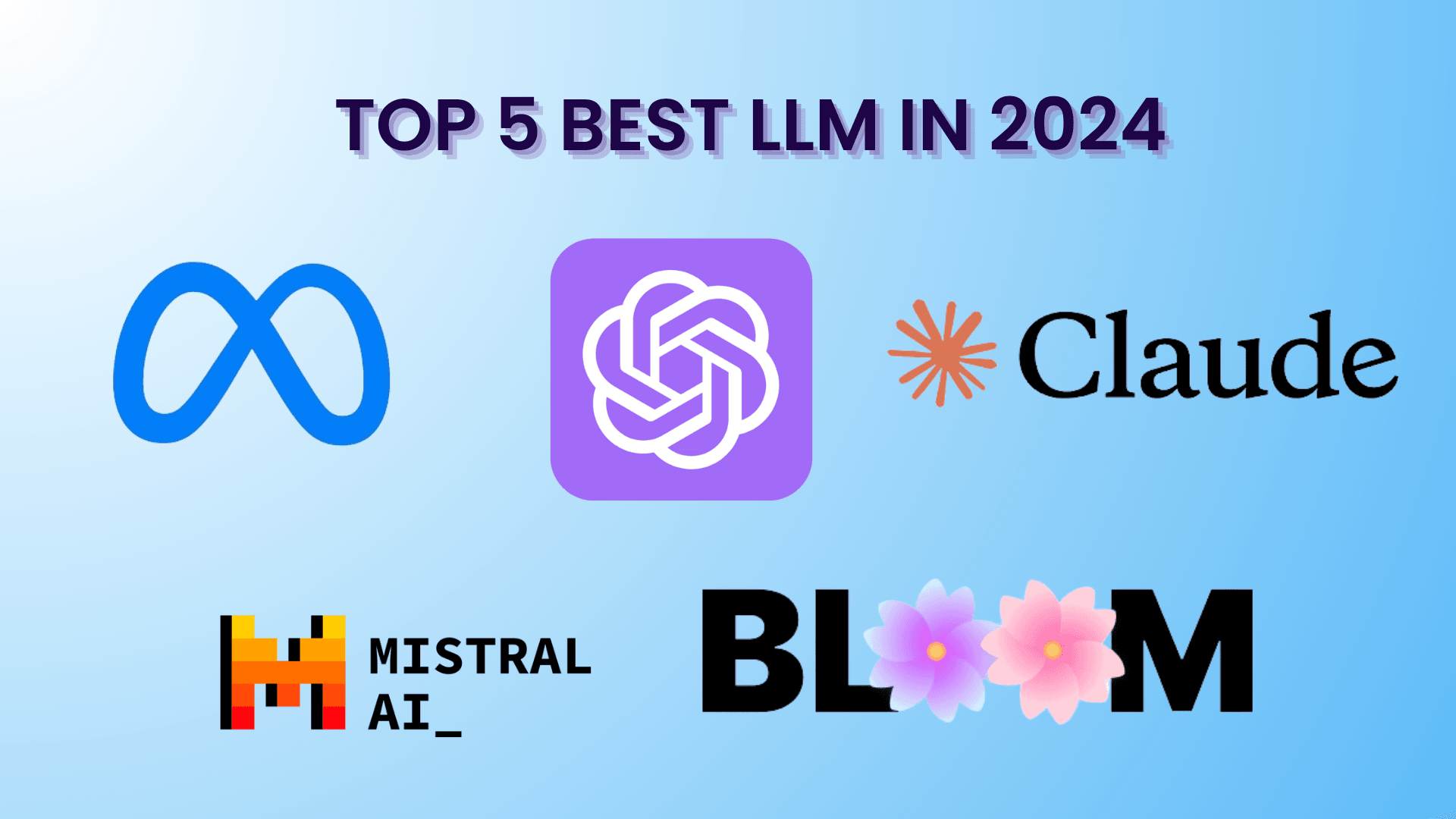
The 5 best language models and their uses
Discover the features and performance of the best LLMs on the market.
09/22/2026
Read more
AI Non-Training: Legal Requirements and What Leexi Provides
Leexi does not train any AI models on your meetings. Written commitments, which models read your data, GDPR requirements, and documents for your DPO.
10/12/2026
Read more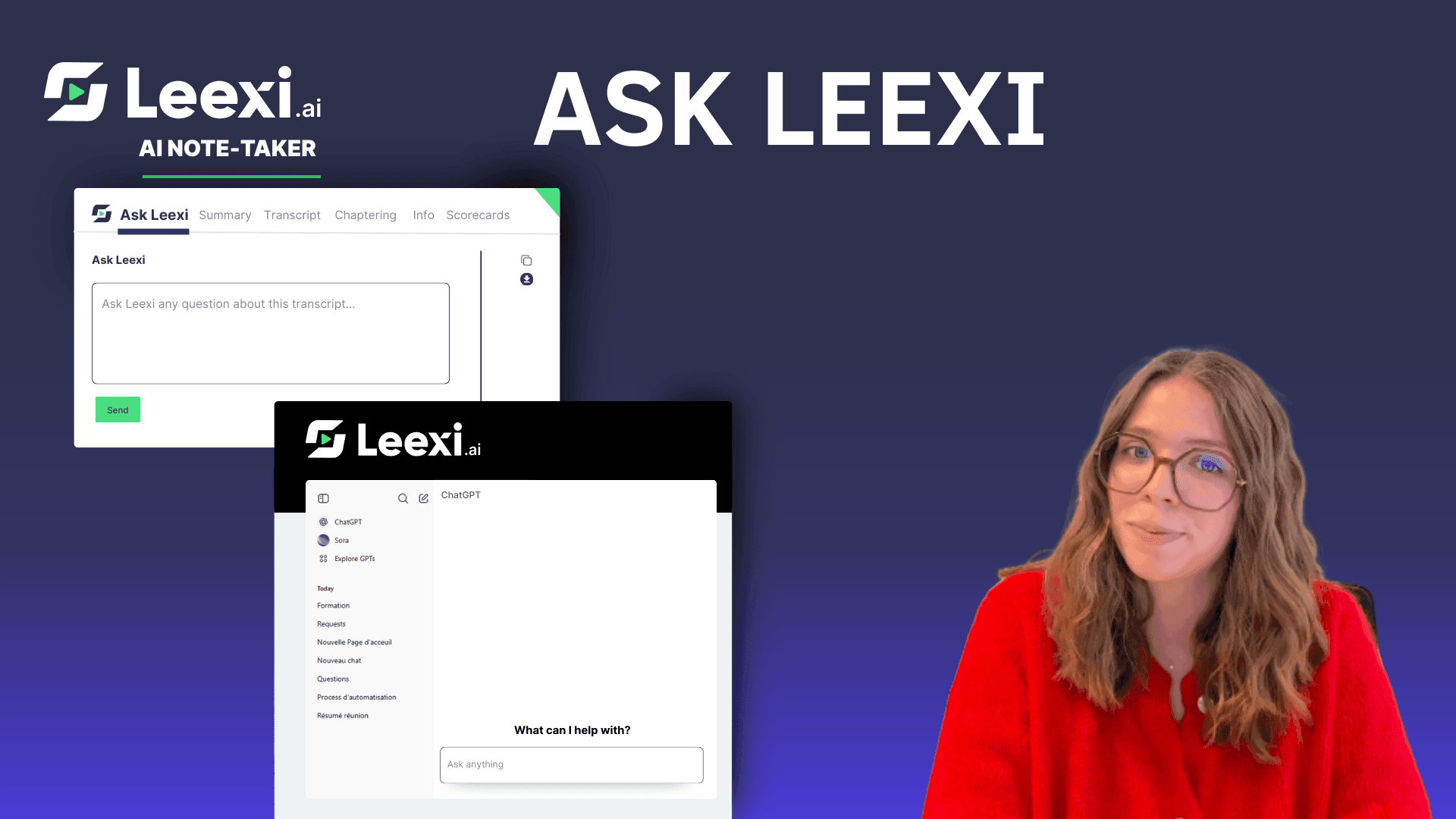
How to use ASK Leexi, your AI assistant?
ASK Leexi answers your questions, analyzes your calls, and secures your data to help you save valuable time.
10/05/2026
Read moreReady to boost your productivity with Leexi?
Leexi AI Notetaker takes notes for you